
By: Richard Hanus, Esq.
October 19, 2026
DHS Finalizes Halt to Automatic Extension of Certain Employment Authorization Documents
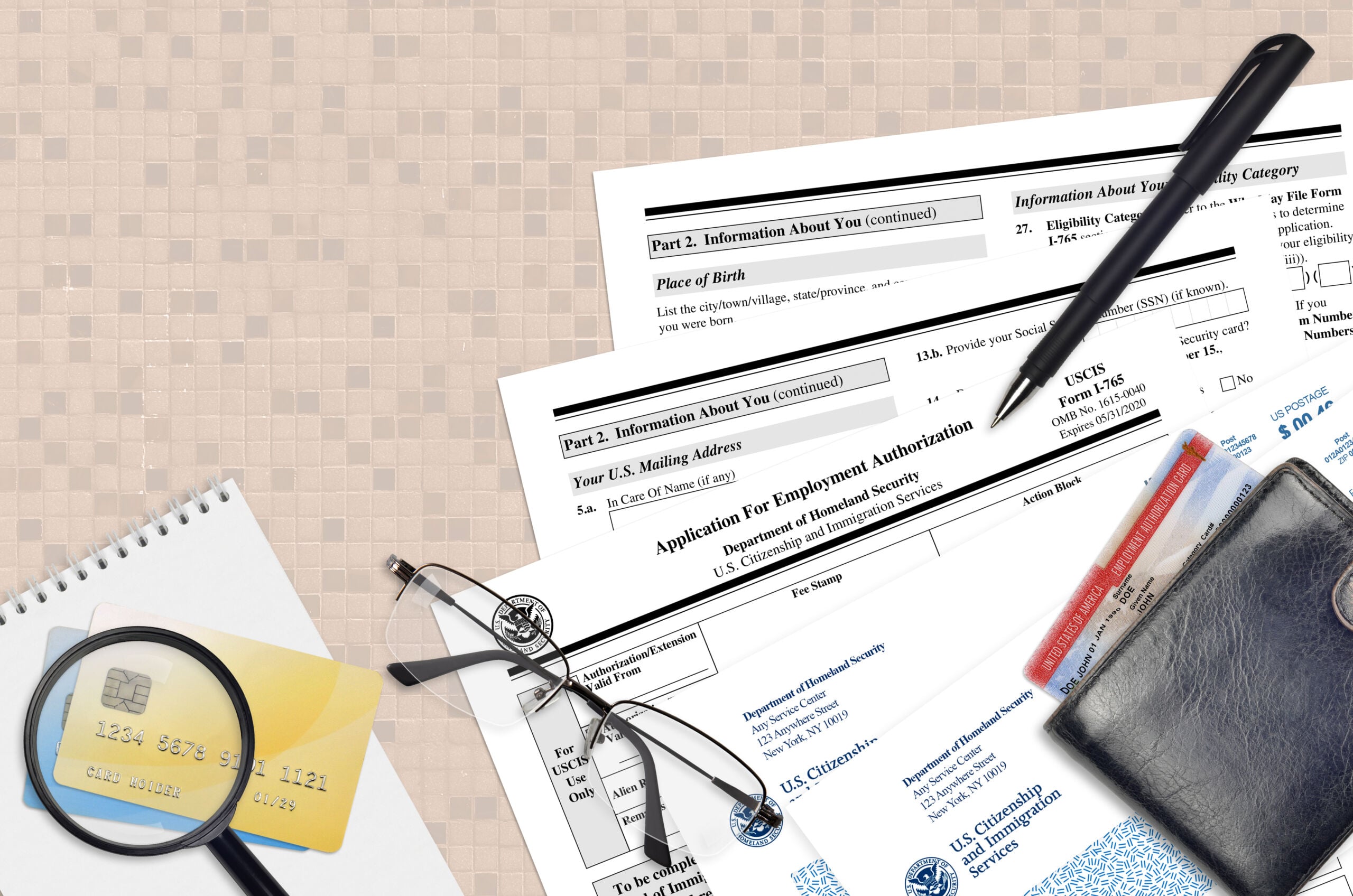
An Employment Authorization Document, also known as a “work permit” or “EAD”, is the documentary proof the U.S. Department of Homeland Security/Citizenship and Immigration Services (DHS/CIS) issues to foreign national applicants seeking permission to take on employment in the U.S. The EAD is in a class separate and apart from a work visa, such as the H-1B, L-1 or E-1/2, where eligibility depends on a job offer or investment along with the foreign national’s skills, education and/or experience. In contrast, to be eligible for an EAD, an applicant can qualify based on one of several dozen eligibility classifications, such as under the Deferred Action for Childhood Arrival (DACA) program or as a pending applicant for asylum or adjustment of status (to green card status). Over the years, DHS/CIS processing of applications to extend current EAD’s has slowed to the point where the agency decided to allow filing receipts for certain classes of extension filings serve as proof of extended employment authorization pending application review, and for up to 540 days. Citing security concerns though, DHS/CIS has finalized its rule discontinuing this policy effective immediately and retroactive to filings submitted on or after October 30, 2025. Impacted eligibility classes include pending adjustment of status or asylum applicants, as well as certain H-4 visa and TPS applicants.
Without a massive improvement to DHS/CIS’ efficiency in processing EAD renewal applications, the end of the auto-extension to EAD’s has the potential to massively disrupt the lives of hundreds of thousands of foreign nationals along with the operations of their employers. In the meantime, impacted EAD holders are advised to file for their renewals/extension well in advance of their expiration date. But who knows, perhaps the end of the auto extension policy will bring a more efficient and speedy processing framework (yes, one can dream). Likely though, federal litigation to block the rule’s implementation is on the horizon.
Work Visa Status Extensions To Undergo Greater Scrutiny
Immigration officers will soon have more leeway to deny a US employer’s petition to extend a foreign national’s work visa status and eligibility to continue in their workplace roles. More specifically, DHS/CIS recently announced it will be reversing a policy of giving deference to previous eligibility determinations for foreign workers on temporary visas when it considers petitions to extend their authorization for lawful employment.
The implementation of this policy rests on the presumption that previous DHS/CIS decision-making could very well have been riddled with errors or fraud and that a new approach to case review is needed. The degree to which this matches with reality, however, is highly questionable. Moreover, in many instances already, DHS/CIS officers have been unofficially carrying out a version of this policy by applying heightened scrutiny to extension filings and frequently determining that previous approvals had been issued in error. The new policy would apply to a wide range of temporary work visa status renewals, including for H-1B (degreed professionals), L-1 (international corporation managers/executives), O-1 (extraordinary ability workers), R-1 (religious workers) and many other categories.
In announcing their intent to implement this policy, DHS/CIS declares: “An adjudicating officer’s fact-finding authority should not be constrained by any prior petition approval. Instead, officers should thoroughly review a petition for eligibility and request additional documentation as appropriate based on the merits of each case.” When and if this policy actually becomes implemented remains to be seen. If it does however, employers can expect to see an increase in the number of Requests for Evidence issued and of course an increase in the time required to administer the company’s work visa program.
To stay current on the latest immigration news, be sure to sign up to receive Richard’s Blog at https://www.usavisacounsel.com/newsletter.